


Sleep Consistency Matters More Than Sleep Perfection
Sleep is often approached with the idea that it needs to be done “correctly.” There’s an expectation that if you follow the right routine, go to bed at the right time, and get the ideal number of hours, your sleep should become stable and predictable. When it doesn’t, even small variations can feel like something is off. In practice, sleep does not operate as a fixed outcome from one night to the next. It is shaped by patterns over time. What matters most is not whether each individual night meets a specific standard, but whether your body has a consistent rhythm it can rely on. Sleep quality tends to improve when the system receives clear, repeated signals about when to be awake and when to rest. This is why sleep consistency often matters more than sleep perfection.

The Role of Your Nervous System in Falling Asleep
From a physiological perspective, the nervous system is responsible for managing how your body responds to demands and returns to recovery. During the day, your system naturally moves into a more activated state to support thinking, problem-solving, movement, and engagement. This activation is useful and necessary, but it is not designed to remain elevated continuously. Falling asleep requires a transition away from that activated state. When the nervous system gradually shifts into a more regulated state, the body begins to support processes associated with rest, including slower breathing, a reduced heart rate, and a general sense of settling. When that shift happens smoothly, sleep tends to feel natural and relatively effortless. When the shift is incomplete or delayed, sleep can feel harder to access.
Why You Can’t “Fix” Sleep Without Looking at Your Day
Sleep is often treated as something that begins at night. You create a routine, dim the lights, put your phone away, maybe take a supplement, and expect your body to respond. When it doesn’t, the assumption is usually that something is wrong with sleep itself.
In reality, sleep is not a standalone function. It’s the final expression of how your body has been regulated throughout the entire day. Sleep cannot be fixed in isolation because it reflects how your system has been supported, or strained, from morning through evening.
What happens during the day determines how easily your system can shift into sleep at night. This is why two people can follow the same evening routine and have completely different experiences. One falls asleep within minutes, while the other lies awake, mind active, body unsettled, waiting for a transition that never fully happens. The difference is physiology.
What Recovery Actually Means (And Why Most People Aren’t Getting It)
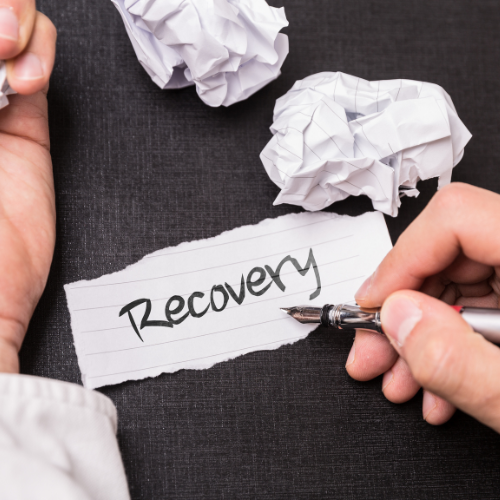
Recovery is often associated with time away from work. It’s framed as something that happens at the end of the day, on weekends, or during periods of rest. Sleep is usually placed at the center of this conversation, and while it’s essential, it’s not the only place where recovery occurs.
For many people, recovery has become something they expect to “catch up on” later. The day is structured around output, and recovery is reserved for when everything else is complete. This approach can work temporarily, but over time it tends to create a pattern in which the body is asked to sustain more than it can restore. When recovery is delayed, compressed, or inconsistent, energy begins to feel less stable. Focus becomes more effortful, sleep becomes less restorative, and the body has less capacity to respond to daily demands. Recovery isn’t a single event. It’s a process that unfolds continuously throughout the day.

The Hidden Cost of “Pushing Through” Fatigue
There’s a certain level of fatigue that has become normalized. It often shows up as a dip in the afternoon, a need for caffeine to maintain focus, or a sense that getting through the day requires more effort than it used to. For many high-functioning individuals, this is interpreted as something to work through. The ability to keep going despite feeling tired is often seen as a strength. It can boost productivity in the short term and create momentum. Over time, however, consistently overriding fatigue begins to change how the body regulates energy, stress, and recovery. When that feedback is repeatedly bypassed, the systems responsible for maintaining energy begin to adapt in ways that are less supportive over time.

Why Your Energy Feels Inconsistent (Even When You’re Doing Everything “Right”)
There is a point at which effort stops being the limiting factor in how energy feels throughout the day. Most people who reach this point aren’t underperforming or disengaged. In fact, they often do a great many things well. They are paying attention to their nutrition, exercising consistently, and making an effort to support their sleep. They are intentional about their routines and aware of what they put into their bodies. On paper, everything looks aligned. And yet, their energy doesn’t feel stable.

When “Healthy” Starts to Feel Like Too Much
Recently, I sat down to dinner and ate a meal that, on paper, would be considered very healthy. Spinach dal with leftover mixed grains. A large salad with a wide variety of vegetables. A hard-boiled egg.
These are all foods I eat regularly. Nothing felt out of place. And yet, shortly after eating, I felt it. A wave of nausea. A headache that built quickly, sitting somewhere between dull and sharp. A sense that something in my system wasn’t settling the way it normally does. It wasn’t dramatic, but it was clear. My body was responding.

Your Physiology Follows Your Identity
When people attempt to change their health habits, the focus often lands on strategy. New routines are introduced, schedules are reorganized, and goals are defined. While these elements can be helpful, long-term change rarely depends on strategy alone. It is shaped more deeply by identity.
Identity influences how we interpret our experiences, how we respond to stress, and which behaviors feel natural or sustainable. It acts as an internal framework that guides everyday decisions, often without conscious awareness. From a biological perspective, identity influences physiology through behavior patterns and nervous system signaling. The way we see ourselves affects how we eat, sleep, move, and respond to pressure. Over time, these patterns shape metabolic health, stress resilience, and cognitive performance. This relationship between identity and physiology is often overlooked in discussions of health optimization. Yet it is central to sustainable change.
When behavior aligns with identity, habits feel stable and consistent. When behavior conflicts with identity, even well-designed plans can feel difficult to maintain. Understanding this connection allows us to approach health change in a more integrated way.

Why Emotional Stability Starts with Deep Sleep
When people think about improving sleep, the conversation often centers on total sleep time. The familiar recommendation to “get eight hours” has become shorthand for healthy sleep. While duration certainly matters, the quality and structure of sleep may be even more important.
Exercise as Brain Medicine
Movement is often framed as a tool for physical fitness. It improves cardiovascular health, supports metabolic regulation, and helps maintain musculoskeletal strength. While these benefits are important, they represent only part of the story. Physical activity is also one of the most powerful interventions available for supporting brain health.
The brain responds rapidly to movement. Circulation increases. Oxygen delivery improves. Neurochemical signaling shifts. Neural networks become more receptive to learning and adaptation. These changes influence how clearly we think, how well we regulate emotion, and how effectively we learn and remember information.
For individuals responsible for complex thinking and decision-making, movement is not simply exercise. It is neurological support. Understanding how physical activity influences brain function changes how we think about movement. It becomes less about burning calories and more about sustaining cognitive capacity.

Are You Building Stress Tolerance or Just Storing Stress?
Sustainable high performance requires stress. It also requires recovery.
Many high achievers assume that the ability to tolerate pressure means they are becoming more resilient. In reality, there is an important distinction between adapting to stress and accumulating stress. One strengthens the system. The other quietly depletes it.
Stress itself is not inherently harmful. The body is designed to respond to challenge. The nervous system mobilizes energy, sharpens attention, and increases cardiovascular output in order to meet demand. When that activation is followed by adequate recovery, the system recalibrates and becomes more capable the next time.
Problems arise when activation is continuous, and recovery is incomplete. At that point, the body is no longer adapting. It is storing.
Understanding the difference changes how we design performance, leadership, and longevity.

How to Prepare for Daylight Saving Time (Spring Forward)
Each March, Daylight Saving Time shifts the clock forward by one hour. On paper, the change looks small. In practice, that single hour can influence sleep, mood, focus, and energy for several days afterward.
Many people assume that losing an hour of sleep for one night is the only issue. What is actually happening runs deeper than that. The time change alters the relationship between your internal body clock and the external cues that regulate it, particularly light exposure. Your brain and nervous system rely on those cues to coordinate when you feel alert, when you feel sleepy, and how your body manages energy throughout the day.
When the clock jumps forward, your circadian rhythm suddenly finds itself out of sync with the environment. Morning light arrives later relative to your biological clock, while evening light stays present longer. For many people, this shift temporarily delays the signals that help the body prepare for sleep.
The result can look like difficulty falling asleep, grogginess in the morning, lighter sleep, or a sense that your daily rhythm feels slightly “off.” Fortunately, the body is highly adaptable. With a few gentle adjustments, most people can realign their rhythm within several days.
Understanding how this process works can make the transition much smoother.

Why Your Brain Feels Full: Understanding Cognitive Load and Decision Fatigue
Sustainable high performance depends on physiological capacity. Cognitive clarity is not created by willpower alone, and it is not sustained by productivity tools in isolation. The brain functions within biological limits. When those limits are consistently exceeded without adequate recovery, mental sharpness declines.
Many high-achieving professionals describe a period when their thinking feels crowded. Decisions that once felt simple begin to require more time. Concentration becomes less stable. There is a subtle sense of friction in tasks that used to flow. The common interpretation is that something is wrong with focus, discipline, or motivation. In most cases, what has changed is biological bandwidth.
The experience of a “full brain” is often a signal of cognitive load exceeding recovery capacity. When we understand the physiology behind this experience, we can respond strategically rather than pushing harder.

Human Connection as Medicine: The Science of Belonging
Connection is often described as an emotional experience. Feeling close. Feeling supported. Feeling understood. But from a physiological perspective, connection is also a biological signal. It signals to the nervous system whether it is safe to soften, recover, and repair, or whether it should remain alert and defensive.
Why Some Habits Feel Natural and Others Never Stick
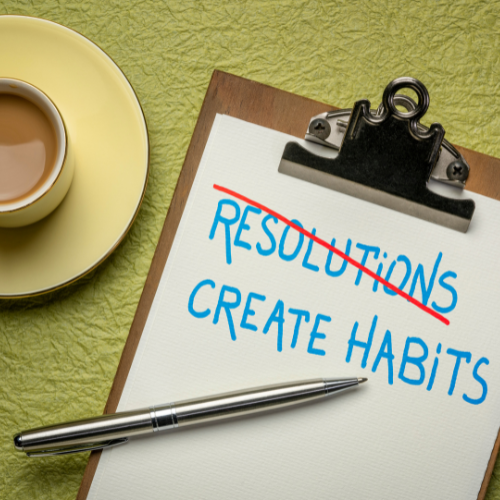
Some habits feel almost effortless. They happen without negotiation, reminders, or mental friction. Others require constant intention and still struggle to hold. Most habit advice explains this difference in terms of effort.

Is Stress Hijacking Your Hormones?
Stress is often described as an emotional experience.
Feeling overwhelmed.
Feeling pressured.
Feeling like there’s never quite enough time.
But inside the body, stress is not a feeling. It is a hormonal event. Whether or not we consciously register stress, our hormones respond to it constantly by adjusting metabolism, energy availability, immune activity, sleep depth, and even how safe the body feels from moment to moment. At the center of this response is cortisol.

Your Heartbeat Is a Longevity Signal. Here’s How to Strengthen It
When most people think about heart health, they focus on crisis prevention. Heart attacks. High blood pressure. Cholesterol numbers. A single moment in the future when something “goes wrong.” But from a physiology and longevity perspective, your heart is not a device you monitor only when it malfunctions. It is a continuously responsive organ that reflects how well your entire system is adapting to life.
Your heartbeat conveys information about your nervous system, hormonal balance, metabolic flexibility, sleep quality, and cumulative stress load. In other words, your heart is not only a pump. It’s a signal. And when we learn to interpret and support that signal, cardiovascular health stops being a distant outcome and becomes a daily, trainable capacity. This is where longevity science has shifted in recent years… away from isolated markers and toward patterns of adaptability, resilience, and recovery.

How to Start Your Day Calm, Not Chaotic
For many people, mornings quietly set the tone for the entire day.
Not because of what gets accomplished, but because of how the nervous system is engaged in those first moments of waking. A rushed start, even a subtle one, can create a sense of urgency that lingers well into the afternoon. A steadier start often creates more space than expected, even on busy days.
By late January, this becomes especially noticeable. The initial push to “get back into routine” has passed, and what’s left is reality. Work demands are real. Family needs don’t disappear. Energy may be improving, but it still feels finite.
This is where morning routines often get misunderstood.
A resilient morning routine is not about doing more before 9 a.m. It’s not about optimization or discipline. It’s about how the body transitions from rest into engagement, and whether that transition supports steadiness or reinforces stress.
This article explores what actually makes a morning routine resilient, why calm matters more than control, and how to shape mornings to support energy rather than drain it.

Moving from Crash Recovery to Sustainable Energy
For many people, January begins in recovery mode.
There’s a quiet awareness that energy dipped too low at some point last year. Maybe it happened slowly. Maybe it followed a specific season of overextension. Either way, the body is no longer interested in being pushed the same way.
At first, recovery often looks like rest. More sleep. Fewer commitments. A softer schedule when possible. This phase matters, especially after prolonged stress.
But at some point, another question appears:
How do I move forward without crashing again?
This is where many people get stuck. They don’t feel depleted in the same way anymore, but energy still isn’t reliable. Some days feel steady and clear. Other days feel fragile. It becomes hard to tell what’s helping and what’s quietly draining reserves.
This article is about bridging that gap (moving from crash recovery into sustainable energy) and learning how to track energy in a way that actually supports progress, rather than turning it into another performance metric.

Why You’re Still Tired and What Your DNA Has to Say About It
By January, many people have already tried to “get back on track.” Sleep schedules are adjusted. Work routines resume. Nutrition feels a bit more intentional. Yet despite these efforts, energy still feels inconsistent.
This lingering fatigue often leads to a familiar internal dialogue: I’m doing the right things, so why don’t I feel better yet?
For a growing number of high-functioning adults, the answer isn’t found in willpower or motivation. It’s found at a much deeper level… inside the mitochondria, and within the genetic instructions that shape how those mitochondria function.
This article explores why energy recovery can stall after stress or burnout, how your DNA influences cellular energy production, and why understanding your mitochondrial blueprint can shift how you approach recovery.